
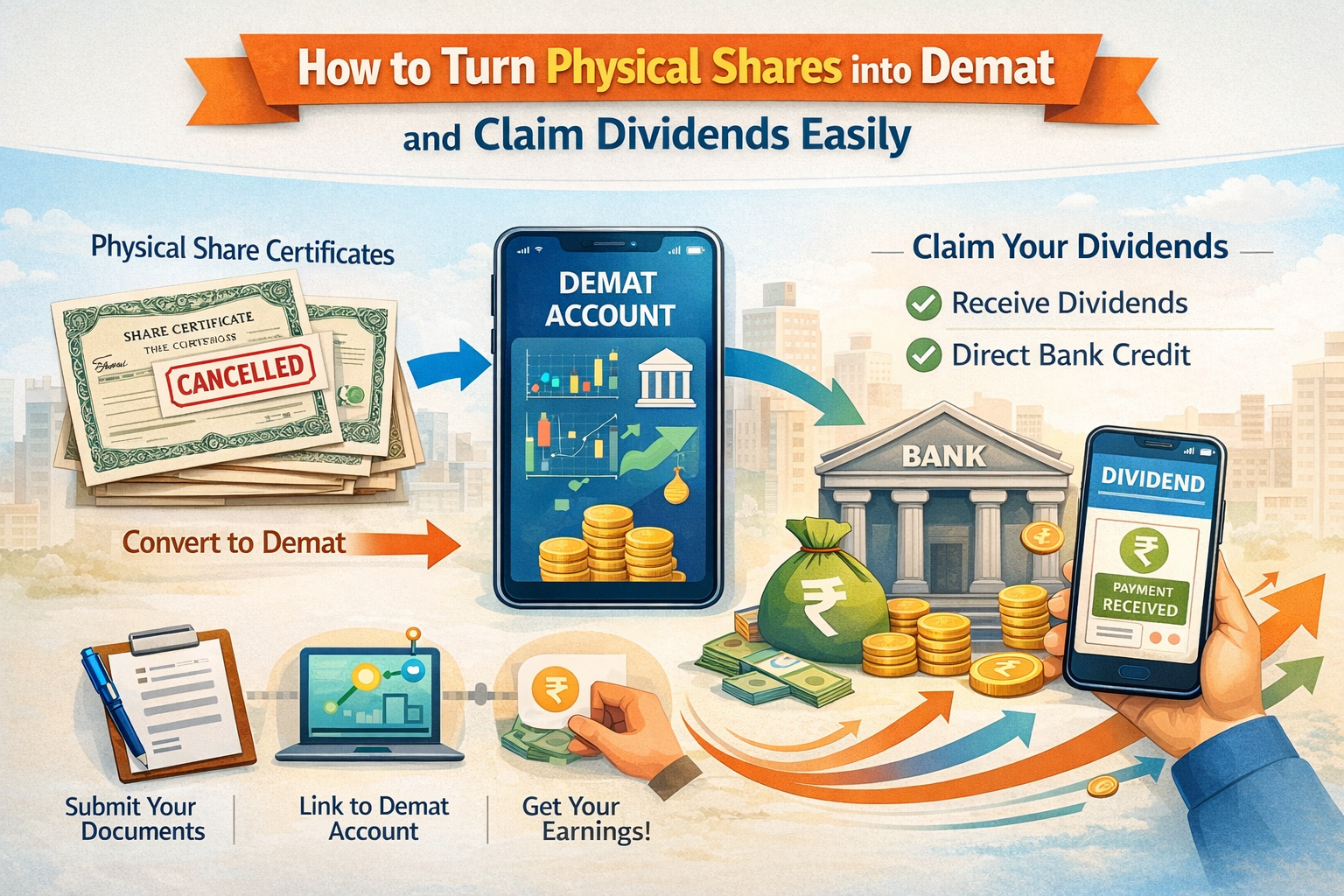
If you or someone in your family invested in the stock market years ago, there’s a good chance you still have physical share certificates lying in a file or locker. Maybe they were bought decades ago, maybe they were inherited, or maybe you simply forgot about them. The good news is that converting physical shares into Demat form is simpler than it sounds.
While those paper certificates may feel valuable, holding shares in physical form today can make things complicated. Selling them is difficult, tracking dividends becomes messy, and there’s always the risk of loss or damage.
Once done, managing your investments and claiming dividends becomes much easier. Many people even consult a financial advisor, financial consultant, or financial online advisor to ensure the process is completed smoothly.
Why You Should Convert Physical Shares to Demat
Before understanding the process, it helps to know why dematerialisation is important.
Physical shares come with several problems:
- Certificates can be lost, damaged, or stolen
- Selling them requires lengthy paperwork
- Dividend payments may get delayed or missed
- Transferring ownership is complicated
Demat shares, on the other hand, are stored electronically in your account. This makes everything faster, safer, and more convenient.
Also, current regulations restrict the transfer of physical shares, so converting them is almost essential if you want to manage or sell them in the future.
Step 1: Open a Demat Account
The first step is to open a Demat account with a bank or brokerage that acts as a Depository Participant (DP).
You’ll usually need:
- PAN card
- Address proof
- Bank details
- Photograph
Most platforms allow you to open the account online within a day or two.
If you’re unsure which provider to choose, a financial online advisor can help compare charges, service quality, and ease of use so you pick the right one.
Step 2: Fill the Dematerialisation Request Form (DRF)
Once your Demat account is ready, the next step is to submit a Dematerialisation Request Form, commonly called a DRF.
You’ll need to submit:
- The DRF form
- Your original physical share certificates
Your DP then sends these to the company’s registrar for verification.
A financial consultant can help you fill the form carefully, because even small errors — like signature mismatches — can cause delays.
Step 3: Verification and Conversion
After submission, the registrar checks:
- Whether the certificates are genuine
- Whether your signatures match records
- Whether ownership details are correct
If everything is fine, the physical certificates are cancelled and the shares are credited to your Demat account electronically.
This usually takes around 2–4 weeks.
Once completed, you’ll see the shares listed in your account just like any modern investment.
Step 4: Update Bank Details to Receive Dividends
After your shares are converted, the next important step is to ensure your bank details are correctly linked to your Demat account.
Dividends today are credited directly to the registered bank account. If your details are outdated, you might miss payments.
A financial advisor often reminds clients to double-check this step, as many investors lose dividends simply because their bank information wasn’t updated.
How to Claim Old or Unpaid Dividends
If you held shares physically for years, there’s a chance some dividends were never claimed.
Here’s what you can do:
- Visit the company’s website or registrar’s portal to check unpaid dividend status.
- Submit a request with your Demat and bank details.
- Provide identity proof if required.
If dividends are very old, they may have been transferred to the Investor Education and Protection Fund (IEPF). Even then, you can claim them by submitting the required forms.
A financial consultant can guide you through this process, especially when paperwork feels confusing.
Benefits of Holding Shares in Demat Form
Once your shares are dematerialised, managing them becomes far easier.
No More Risk of Paper Loss
You don’t have to worry about misplaced or damaged certificates.
Faster Dividend Payments
Dividends get credited directly to your bank account without any paperwork.
Easy Buying, Selling, and Transfer
You can sell or transfer shares online in minutes instead of weeks.
Clear Portfolio Tracking
All your investments appear in one place, making it easy to monitor performance.
Many investors consult a financial online advisor after dematerialisation to review their holdings and decide whether to keep or rebalance them.
Common Mistakes to Avoid
While the process is simple, a few small mistakes can slow things down:
- Signature mismatch between documents and certificates
- Name spelling differences
- Missing nominee information
- Outdated bank details
Getting guidance from a financial advisor can help you avoid these issues and complete the process without unnecessary delays.
Final Thoughts
Physical share certificates may feel like valuable keepsakes, but in today’s digital world, they often create more problems than benefits. Converting them into Demat form brings safety, convenience, and better control over your investments.
If you have old certificates lying unused, now is a good time to convert them and ensure you don’t miss dividends or future benefits.
And if you feel unsure about any step, a trusted financial consultant, experienced financial advisor, or reliable financial online advisor can help you complete the process confidently.
Because sometimes, the smartest financial move isn’t making a new investment — it’s organizing the ones you already have.